State of the Arts
LOVERULES: Hank Willis Thomas
Clip: Season 45 Episode 1 | 8m 54sVideo has Closed Captions
Hank Willis Thomas deconstructs advertising as a language at the Zimmerli Art Museum.
Internationally acclaimed artist Hank Willis Thomas deconstructs advertising as a language to learn about society then and now. Through his use of powerful branded imagery and objects he questions their relationship with humanity and our existence within pop culture. His exhibition, LOVERULES, at the Zimmerli Art Museum is both a critique of advertisement, and a message of hope.
Problems playing video? | Closed Captioning Feedback
Problems playing video? | Closed Captioning Feedback
State of the Arts is a local public television program presented by NJ PBS
State of the Arts
LOVERULES: Hank Willis Thomas
Clip: Season 45 Episode 1 | 8m 54sVideo has Closed Captions
Internationally acclaimed artist Hank Willis Thomas deconstructs advertising as a language to learn about society then and now. Through his use of powerful branded imagery and objects he questions their relationship with humanity and our existence within pop culture. His exhibition, LOVERULES, at the Zimmerli Art Museum is both a critique of advertisement, and a message of hope.
Problems playing video? | Closed Captioning Feedback
Where to Watch State of the Arts
State of the Arts is available to stream on pbs.org and the PBS app.
Providing Support for PBS.org
Learn Moreabout PBS online sponsorshipThomas: No photograph is truly objective.
They all represent a particular perspective and fragment of a second in the life of the author.
And so what I've always been interested in is like, what were the motives that led the person to take the picture?
What story were they trying to tell?
Rather than seeing it as an official objective truth.
Advertising is the most powerful language.
What makes advertising so fascinating is that you can not even speak a certain language, and all of a sudden I can understand what's being sold and what story they're trying to tell, because I've been trained in this non-literal language of advertising.
And so I think the more that we're aware of how we can use that language to talk about other things, the more empowered we are.
So my work is really kind of about play, and this kind of revelation that comes in challenging the way that I and viewers can relate to a material that we come to know.
My name is Hank Willis Thomas, and I am a person.
I remember watching a documentary when I was a child about James Baldwin, and he says, a person is more important than anything else.
I realized that so often when we allow ourselves to be labeled by race, gender, class, religion, geography, that we actually are alienating ourselves from other people.
So if I say I'm an artist, so that's putting my occupation ahead of the only thing that really matters, someone's ability to connect with me as a person, as a human being.
And so at the end of the day, all of us ever want to be and deserve to be is human beings and to be treated as human beings.
McCarthy: Love Over Rules is a survey of Hank Willis Thomas' practice.
It's 20 years of his work.
That's about 90 prints.
What's exciting is it touches on almost every aspect of his production.
This is the first time we've shown Hank Willis Thomas' work at this scale.
It's the first time this show has come to the East Coast, and I think there's a lot for people in New Jersey to see.
What we try to do here at the museum is show people art that sometimes changes the way they think about images outside of the museum.
What he's doing in a lot of this work is taking very familiar images, photographs, slogans, things that you kind of already know, but then decontextualizing them.
Thomas: What I love about text art is that when a viewer reads it, if they can read that language, they are subconsciously imbibing it, right?
So when I read the word love over rules, it's actually like a submission to a command that you can't read it and resist it at the same time.
I first started to kind of get into hands and arms looking at the way that gestures play in protest and the symbolization of some of these gestures, and also how they can create solidarity.
But I also started thinking about sports and how the ball is a metaphor for the now.
And I think that's why people love sports is like the ball is in your hand.
What are you going to make of this moment?
It's important for all of us to remember that the only reason that we exist is because of love.
My mother, Deborah Willis, who is an artist and art historian and photographer and friend, is a lover of humanity, a lover of America.
She spent her entire life telling the beautiful and complicated stories of our existence.
She loves not only the people who her stories are about, but the people who she's telling those stories to.
And so I hope to be following in her footsteps in a responsible way.
We exist as a result of a culture of care.
And, you know, by putting love over rules for millennia, humanity has evolved and flourished.
I had to come to terms with a lot of my own notion of who I am and what other people believe I am is kind of dictated by the popular culture references that we see in advertising.
I started thinking about advertising as a way to travel through time and learn about society, where I am and where I belong in it.
McCarthy: So with Branded, he focused on branded objects.
So whether it's Nike, credit cards, and amplified the branded aspect of them.
So took the kind of signs and symbols of the brand and put them in strange places so that you started to think about their relationship, in some cases to sports, to entertainment, to the human body, and how the body could sometimes become a currency.
And then with Unbranded, which came after, he did the opposite, where he took these branded photographs and removed all of the branding information.
Thomas: "Unbranded, A Century of White Women" is a series of images where I took one ad for every year and removed all the advertising information.
So we're just looking at what stories the pictures tell, and it says a lot about how identity is formed through the virtues and values that are celebrated in a society at a specific moment in time.
And in a way, you can kind of track the evolution of a demographic through the way that they're being marketed to.
McCarthy: You start to look at these images completely out of context, and it awakens something in you where they appear strange but familiar at the same time.
You realize that for as much as things have changed, they've essentially stayed the same for the way we've marketed products to women, whether it's featuring their body or certain connotations around them.
Thomas: I love flags.
I love flags because they are objects that kind of carry so much meaning for the people who hold them up, and there's a sense of community and joy and pride.
But there's also for those who don't live under that flag, sometimes a challenge and an indictment or a dismissal or an attack.
The fact that something that's so simple can kind of mean so much, but also mean so many different things to so many different people is something that I'm really fascinated with.
So it's also a form of advertising, right?
It's a brand, you know, the flag.
I love to take these symbols, which are almost like our era's Hieroglyphs, put them in conversation with each other.
Saluti: What really captured my attention was the counter position of the Confederate flag, so this symbol of hatred and of slavery and violence, and seeing it in the same piece as parts of the pride flag and the progress flags and the Black Lives Matter flags.
We are all these different sorts of people from different walks of life, and sometimes those walks of life come into direct conflict with each other.
As you walk throughout the exhibit and you see all these different walks of life and forms of love, you start to see more and more connection between them.
Thomas: I think a lot about the world that I grew up in.
There was an American dream, and it was a dream that was worth striving for.
And there was an optimism.
Even though there were huge obstacles that many people faced at home and abroad, there was a hope, and I believe that over the past 10 years, a lot of that hope has dissipated.
I guess, in the most cliche way, my desire is to keep hope alive.
Everyone who's ever created something is an artist.
The clothes you wear, the tone of voice, the way you introduce yourself, we're all creating reality in that moment.
And so there is an art craft to it when we're conscious.
I don't know what direction my practice is taking, but I do have exhibitions in Italy and France doing public art projects in different parts of the country, and just trying to elevate the voices of the less popular, the less explored people in our country and our society.
 New
Music of the People: The New Jersey Folk Festival
Video has Closed Captions
Clip: S45 Ep1 | 9m 19s | The New Jersey Folk Festival celebrates traditional culture from diverse communities (9m 19s)
 New
Nyugen Smith: The Art of the Game
Video has Closed Captions
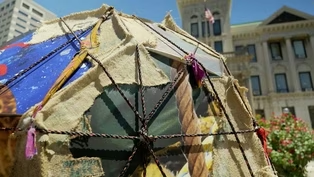
Clip: S45 Ep1 | 6m 46s | Nyugen Smith creates a soccer ball sculpture for the 2026 FIFA World Cup. (6m 46s)
Providing Support for PBS.org
Learn Moreabout PBS online sponsorship New Episode
 New Episode
- Arts and Music

Innovative musicians from every genre perform live in the longest-running music series.


 New Episode
 New Episode
 New Episode

Support for PBS provided by:
State of the Arts is a local public television program presented by NJ PBS