State of the Arts
Music of the People: The New Jersey Folk Festival
Clip: Season 45 Episode 1 | 9m 19sVideo has Closed Captions
The New Jersey Folk Festival celebrates traditional culture from diverse communities
The New Jersey Folk Festival is a vibrant one-day multi-stage celebration of the traditional music and crafts of the state’s diverse ethnic and cultural communities. Started in 1975, the New Brunswick-based event is one of the nation’s longest continuously running folk festivals, and it’s still going strong.
Problems playing video? | Closed Captioning Feedback
Problems playing video? | Closed Captioning Feedback
State of the Arts is a local public television program presented by NJ PBS
State of the Arts
Music of the People: The New Jersey Folk Festival
Clip: Season 45 Episode 1 | 9m 19sVideo has Closed Captions
The New Jersey Folk Festival is a vibrant one-day multi-stage celebration of the traditional music and crafts of the state’s diverse ethnic and cultural communities. Started in 1975, the New Brunswick-based event is one of the nation’s longest continuously running folk festivals, and it’s still going strong.
Problems playing video? | Closed Captioning Feedback
Where to Watch State of the Arts
State of the Arts is available to stream on pbs.org and the PBS app.
Providing Support for PBS.org
Learn Moreabout PBS online sponsorshipFerguson: We are definitely the oldest continuously running folk festival in the state of New Jersey, and we say we are one of the oldest or longest running festivals in the country.
DeAngelo: It's a community event where there is music, there's dancing, people doing heritage crafts.
Every 20 or 30 feet, there's something else that's going on.
[ Singing in native language ] Narrator: The New Jersey Folk Festival began in 1975 at Rutgers University's Douglass College.
But after more than 50 years, it's grown out into the community.
It's become a sprawling celebration of many global traditions, pushing the boundaries of what people usually think of as folk music.
Ferguson: We get that question a lot.
Is that folk music?
Right off the bat, I always say to people when they say, is that folk music?
I say it's the music of the people, right?
It's meant to be a showcase of any type of music that is from the people, for the people.
Think bottom up music, not top down.
Traditional music represents the cultures that have moved here, and with New Jersey being so diverse, we're able to feature so many different artists and types of music and art.
Man: [ Lyrics ] Praise the Lord!
Choir: Praise the Lord!
Ferguson: There's a long standing tradition that we would feature a gospel group as an opening act.
Man: [ Lyrics ] Praise the Lord!
Ferguson: The Cathedral Arts and Music Ministry, I mean, they have been established in Perth Amboy for a very long time.
The Long Hill String Band, they are a great example of what folks will call either like old time, old timey or roots music.
Baez: Until she does the saludo and wants to have a conversation.
Ferguson: We always love having Cimarrones.
Nelson Baez is their leader, an amazing musician, but also one of our New Jersey Heritage Fellows for the mastery of his craft and art form.
Csurdongolo Folk Ensemble is based out of New Brunswick, New Jersey, which is where the festival started.
Huge Hungarian population.
And they have youth performers.
They have older performers who are kind of continuing this tradition of that music.
Charlie Apicella and Iron City, he works with Madame Pat Tandy.
She has spent a lot of her time in Newark, and she's one of the most prominent known blues singers in the US.
Tandy: [ Lyrics ] Turn around and make up.
Ferguson: So again, is this folk?
Yeah, absolutely.
Blues, jazz music are definitely in the category of folk because they have the roots from gospel music, Tandy: [ Lyrics ] Times are good, bad, happy or sad.
DeAngelo: Anybody who plays folk music or who does a craft, you're there to share it with people.
You could be exposing people to the first time that they're hearing your kind of music.
Gillespie: I was not really thinking about starting a folk festival.
I was just trying to be a successful professor.
Ferguson: Dr.
Gillespie, it was his brainchild.
He wanted to have a festival that celebrated folk arts.
He was inspired by a lot of folk music and art founded in the Pine Barrens.
DeAngelo: I was the first music director at the New Jersey Folk Festival in 1975.
Pivotal year.
I was a senior at Douglass College.
Gillespie: Cathy DeAngelo was a remarkable young woman.
She apprenticed herself to Ed McDermott, who was a 77-year-old Irish fiddler, and she absorbed it.
She was really into traditional music.
DeAngelo: Angus originally asked me to be a strolling musician as the music for the festival.
I said, no, that's not what a festival is.
I'll get music.
Gillespie: The week before the festival, it was raining cats and dogs night and day.
I was having a nightmare.
I thought, this is a disaster.
DeAngelo: Maybe 500 people will come, maybe a thousand people.
Gillespie: Saturday, the folk festival, the sun shone.
I said, thank you, Lord.
DeAngelo: He did the smart thing.
He linked it up with ag field day.
Gillespie: People would attend the ag festival, and then they would hear the music.
We had 10,000 people for this amateur folk festival.
We got off to a very good start that year.
Narrator: The festival has evolved since its early days at Rutgers, but it remains a celebration of folk life in its many forms.
Ferguson: So the New Jersey Folk Festival is not just about music.
We want to celebrate art and cultural traditions, as well.
And we've historically done this in an area of the festival called the Heritage Area.
A wide variety of demonstrators, artists and presenters to be there.
Those groups were presenting and sharing their art or their craft all day long, for people to enjoy in a very interactive way.
DeAngelo: Folk crafts, folk music, it's about folk tradition.
It's about people learning that from somebody.
That invariably includes people of a younger generation.
Ferguson: We were really excited to host the Folk Villains at the festival this year.
They are a group out of Maryland.
The way they learned folk music was on the front porch of their house.
And they learned it from their father, who was in a group called The Folk Heroes.
We were really blessed to be able to feature the Nrithyanjali Dance Ensemble this year.
This is a group that has toured across the United States around India.
They are an amazing representation of the music and the dance form, and a great example of kind of how some of these cultural traditions are happening right here in New Jersey.
Obviously, to become a professional dancer, you need to take classes, and they have a school and their Emerging Artists performed on our gateway family stage.
DeAngelo: One, two, three, four.
Ferguson: Kathy has been a formative part of the festival since its very beginning, and she also helps organize the act that we brought back this year called The Next Generation of Irish Music.
And they come together and get a great performance experience.
And then we also see, again, the next generation who are still performing folk and traditional music.
DeAngelo: I know when I have these other kids from our next generation sitting there, and they're playing, and they're on stage, I see those little kids out in the audience just light up.
Look what those kids are doing.
Cockey: [ Lyrics ] I'll fly away, oh, glory.
I'll fly away.
DeAngelo: And then they see somebody playing bluegrass or Irish music or Indian music, and they say, I bet you I could do that.
I would really like to do that, because it's live music.
It's happening live.
Cockey: [ Lyrics ] I'll fly away.
DeAngelo: We need more of that.
Ferguson: When you look at the New Jersey Folk Festival and all of the different art and music and culture that we present, this diverse portfolio of just experiences, all in one six-hour day.
We're bringing a lot of people together who do a lot of different things, and everybody gets something out of it and feels like they're a part of it.
So taking Dr.
Gillespie's idea of a small festival on a college campus 51 years ago and making it really a nationally recognized cultural representation of everything, folk and otherwise.
And that's what I hope it continues to be.
 New
Video has Closed Captions
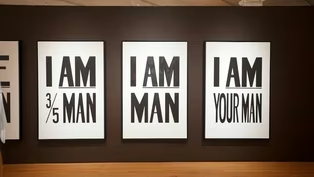
Clip: S45 Ep1 | 8m 54s | Hank Willis Thomas deconstructs advertising as a language at the Zimmerli Art Museum. (8m 54s)
 New
Nyugen Smith: The Art of the Game
Video has Closed Captions
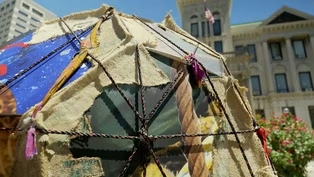
Clip: S45 Ep1 | 6m 46s | Nyugen Smith creates a soccer ball sculpture for the 2026 FIFA World Cup. (6m 46s)
Providing Support for PBS.org
Learn Moreabout PBS online sponsorship New Episode
- Arts and Music

Innovative musicians from every genre perform live in the longest-running music series.
 New Episode
 New Episode
 New Episode

Support for PBS provided by:
State of the Arts is a local public television program presented by NJ PBS