State of the Arts
State of The Arts: October 2026
Season 45 Episode 1 | 26m 46sVideo has Closed Captions
Giant soccer ball by artists for the World Cup, Hank Willis Thomas & the NJ Folk Festival
For the 2026 World Cup, 23 artists created public artworks of giant soccer balls around New York and New Jersey including emerging artist Nyugen Smith. An exhibition by Hank Willis Thomas, one of Time magazine’s “Top 100 People in the Arts,” at the Zimmerli Art Museum. And the NJ Folk Festival has been bringing together traditional musicians from around the state and beyond for over 50 years.
Problems playing video? | Closed Captioning Feedback
Problems playing video? | Closed Captioning Feedback
State of the Arts is a local public television program presented by NJ PBS
State of the Arts
State of The Arts: October 2026
Season 45 Episode 1 | 26m 46sVideo has Closed Captions
For the 2026 World Cup, 23 artists created public artworks of giant soccer balls around New York and New Jersey including emerging artist Nyugen Smith. An exhibition by Hank Willis Thomas, one of Time magazine’s “Top 100 People in the Arts,” at the Zimmerli Art Museum. And the NJ Folk Festival has been bringing together traditional musicians from around the state and beyond for over 50 years.
Problems playing video? | Closed Captioning Feedback
Where to Watch State of the Arts
State of the Arts is available to stream on pbs.org and the PBS app.
Providing Support for PBS.org
Learn Moreabout PBS online sponsorshipNarrator: For the 2026 World Cup, enormous soccer balls became the canvas for artists from around the world.
One was created by Jersey City artist Nyugen Smith.
Smith: The first thing that I thought about was my connection to the game growing up in Trinidad.
Understanding that the game itself is so important in those parts of the world, and when people can't afford a ball, they actually make them out of whatever is available.
Narrator: Hank Willis Thomas works with powerful ideas.
He's included in Time magazine's inaugural list of "Top 100 People in the Arts."
At the Zimmerli Art Museum, there's a wide ranging exhibition of his work.
Thomas: I started thinking about advertising as a way to travel through time and learn about society, where I am and where I belong in it.
Narrator: And the New Jersey Folk Festival has been bringing together cultural traditions from around the state and beyond for a free daylong event for over 50 years.
Ferguson: I always say to people when they say, is that folk music?
I say, it's the music of the people, right?
Tandy: [ Lyrics ] Why, somebody.
Narrator: "State of the Arts," going on location with the most creative people in New Jersey.
Tandy: [ Lyrics ] Turn around and make up.
I just can't see.
Now you.
Announcer: The New Jersey State Council on the Arts, encouraging excellence and engagement in the arts since 1966, is proud to co-produce "State of the Arts" with Stockton University.
Additional support is provided by these friends of "State of the Arts."
Smith: So much of how we relate to the world comes through the body with both art and sport.
When we see something created that wows us and moves us that we can't necessarily do, it becomes intriguing.
Holloway: The Art of the Game, it is an open air museum.
The soccer ball sculptures are spread out over New York City and New Jersey.
There are 23 in all, 23 for the 23rd World Cup.
Arts 14C, we started with a museum committee because we did want this to be a very high level of artist who would be participating, but it was always very important to us that we have a chance to anoint perhaps an emerging artist, to have an open call, to give them a chance to be part of this program.
And I was thrilled to see that Nyugen Smith was selected as the open call winner for New Jersey.
Smith: The first thing that came to mind was celebration of those people who cannot afford to be here for the World Cup.
So much of my practice itself is intuitive.
You know, the ideas that I might have, how does it relate?
How does it translate into a painting or sculpture?
So I saw the open call.
The first thing that I thought about was my connection to the game growing up in Trinidad, as well as my experience as an artist traveling throughout the Caribbean and traveling throughout Africa.
Understanding that the game itself is so important in those parts of the world, and when people can't afford a ball, they actually make them out of whatever is available.
The first part of the process was creating the collage digitally that would then be transferred onto the panels that make up the ball.
Thinking about many of these handmade balls are, they're often made of plastic, fabrics, even banana leaf.
And so I wanted to honor them, uplift them through my work.
Christian: You can actually start with this one.
Smith: You're doing this one first.
Yep.
That's it.
Yeah.
Yeah.
Yeah, you know, like when people would make their own handmade footballs?
Christian: Yeah.
Smith: That's the idea.
Christian: Oh, that's nice.
Smith: That's why it's called "This One's for You."
Christian: Oh.
That's cool.
Smith: Think about people around the world.
Christian: Yes.
Smith: That by any means necessary, they play the game.
Christian: That's right.
Smith: The only place I've seen it was flat on the screen.
So to now see it in three dimensional form, it's definitely more interesting.
And then also, too, just giving me the ideas of the hand embellished elements, you know?
So I'm excited to now shift into that part of the actual process.
Today I'm just experimenting with burlap.
A lot of countries where this sack is really important to carry important goods like staple crops, flour, rice, coffee.
I like it for that kind of like resonance, geographical resonance, as well as being a great material for like, if we're going to make a ball out of different materials that you could find and locate, it's also durable for that kind of purpose as well, too.
I'm thinking the fact that it will be in front of City Hall.
Once you put it out in the public, don't know what's going to happen.
Holloway: As important to our mission as supporting artists and giving artists more opportunities, the audience is absolutely as important.
And public art does that really better than anything.
Because you don't need a ticket, you can just walk up to it.
Arts 14C met with Alex Lasry in March of 2025.
We had to make this something that was as universal as the game itself.
Lasry: You sometimes call some of the best athletes artists, right?
Artists on the pitch, artists on the field, artists on the court.
One of the best ways we can express what this game means to people is through art.
And I think that's why, again, we love this project so much.
It's a way to bring the game to the people outside of the stadium.
Smith: I want people to recognize that they understand the importance of those who are less visible within the context of this entire tournament.
Those who have contributed to this game and the history of this game.
The stars of this game are people that often come from impoverished neighborhoods, impoverished communities.
And when we think about a worldwide tournament like FIFA that's happening now, the World Cup, I hope that people really understand and feel the connection that I'm making back to those who inspired this game, who actually make this game exciting and who cannot afford to be here for this tournament.
Narrator: Up next, Hank Willis Thomas samples images from popular culture, making us see the world in a new way.
Thomas: No photograph is truly objective.
They all represent a particular perspective and fragment of a second in the life of the author.
And so what I've always been interested in is like, what were the motives that led the person to take the picture?
What story were they trying to tell?
Rather than seeing it as an official objective truth.
Advertising is the most powerful language.
What makes advertising so fascinating is that you can not even speak a certain language, and all of a sudden I can understand what's being sold and what story they're trying to tell, because I've been trained in this non-literal language of advertising.
And so I think the more that we're aware of how we can use that language to talk about other things, the more empowered we are.
So my work is really kind of about play, and this kind of revelation that comes in challenging the way that I and viewers can relate to a material that we come to know.
My name is Hank Willis Thomas, and I am a person.
I remember watching a documentary when I was a child about James Baldwin, and he says, a person is more important than anything else.
I realized that so often when we allow ourselves to be labeled by race, gender, class, religion, geography, that we actually are alienating ourselves from other people.
So if I say I'm an artist, so that's putting my occupation ahead of the only thing that really matters, someone's ability to connect with me as a person, as a human being.
And so at the end of the day, all of us ever want to be and deserve to be is human beings and to be treated as human beings.
McCarthy: Love Over Rules is a survey of Hank Willis Thomas' practice.
It's 20 years of his work.
That's about 90 prints.
What's exciting is it touches on almost every aspect of his production.
This is the first time we've shown Hank Willis Thomas' work at this scale.
It's the first time this show has come to the East Coast, and I think there's a lot for people in New Jersey to see.
What we try to do here at the museum is show people art that sometimes changes the way they think about images outside of the museum.
What he's doing in a lot of this work is taking very familiar images, photographs, slogans, things that you kind of already know, but then decontextualizing them.
Thomas: What I love about text art is that when a viewer reads it, if they can read that language, they are subconsciously imbibing it, right?
So when I read the word "love over rules," it's actually like a submission to a command that you can't read it and resist it at the same time.
I first started to kind of get into hands and arms looking at the way that gestures play in protest and the symbolization of some of these gestures, and also how they can create solidarity.
But I also started thinking about sports and how the ball is a metaphor for the now.
And I think that's why people love sports is like the ball is in your hand.
What are you going to make of this moment?
It's important for all of us to remember that the only reason that we exist is because of love.
My mother, Deborah Willis, who is an artist and art historian and photographer and friend, is a lover of humanity, a lover of America.
She spent her entire life telling the beautiful and complicated stories of our existence.
She loves not only the people who her stories are about, but the people who she's telling those stories to.
And so I hope to be following in her footsteps in a responsible way.
We exist as a result of a culture of care.
And, you know, by putting love over rules for millennia, humanity has evolved and flourished.
I had to come to terms with a lot of my own notion of who I am and what other people believe I am is kind of dictated by the popular culture references that we see in advertising.
I started thinking about advertising as a way to travel through time and learn about society, where I am and where I belong in it.
McCarthy: So with "Branded," he focused on branded objects.
So whether it's Nike, credit cards, and amplified the branded aspect of them.
So took the kind of signs and symbols of the brand and put them in strange places so that you started to think about their relationship, in some cases to sports, to entertainment, to the human body, and how the body could sometimes become a currency.
And then with "Unbranded," which came after, he did the opposite, where he took these branded photographs and removed all of the branding information.
Thomas: "Unbranded, A Century of White Women" is a series of images where I took one ad for every year and removed all the advertising information.
So we're just looking at what stories the pictures tell, and it says a lot about how identity is formed through the virtues and values that are celebrated in a society at a specific moment in time.
And in a way, you can kind of track the evolution of a demographic through the way that they're being marketed to.
McCarthy: You start to look at these images completely out of context, and it awakens something in you where they appear strange but familiar at the same time.
You realize that for as much as things have changed, they've essentially stayed the same for the way we've marketed products to women, whether it's featuring their body or certain connotations around them.
Thomas: I love flags.
I love flags because they are objects that kind of carry so much meaning for the people who hold them up, and there's a sense of community and joy and pride.
But there's also for those who don't live under that flag, sometimes a challenge and an indictment or a dismissal or an attack.
The fact that something that's so simple can kind of mean so much, but also mean so many different things to so many different people is something that I'm really fascinated with.
So it's also a form of advertising, right?
It's a brand, you know, the flag.
I love to take these symbols, which are almost like our era's hieroglyphs, put them in conversation with each other.
Saluti: What really captured my attention was the counter position of the Confederate flag, so this symbol of hatred and of slavery and violence, and seeing it in the same piece as parts of the Pride flag and the progress flags and the Black Lives Matter flags.
We are all these different sorts of people from different walks of life, and sometimes those walks of life come into direct conflict with each other.
As you walk throughout the exhibit and you see all these different walks of life and forms of love, you start to see more and more connection between them.
Thomas: I think a lot about the world that I grew up in.
There was an American dream, and it was a dream that was worth striving for.
And there was an optimism.
Even though there were huge obstacles that many people faced at home and abroad, there was a hope, and I believe that over the past 10 years, a lot of that hope has dissipated.
I guess, in the most cliche way, my desire is to keep hope alive.
Everyone who's ever created something is an artist.
The clothes you wear, the tone of voice, the way you introduce yourself, we're all creating reality in that moment.
And so there is an art craft to it when we're conscious.
I don't know what direction my practice is taking, but I do have exhibitions in Italy and France doing public art projects in different parts of the country, and just trying to elevate the voices of the less popular, the less explored people in our country and our society.
[ Music plays ] Baez: Until she does the saludo and wants to have a conversation.
Narrator: Last on the show, cultures and traditions of many kinds find common ground at the New Jersey Folk Festival.
Ferguson: We are definitely the oldest continuously running folk festival in the state of New Jersey, and we say we are one of the oldest or longest running festivals in the country.
DeAngelo: It's a community event where there is music, there's dancing, people doing heritage crafts.
Every 20 or 30 feet, there's something else that's going on.
[ Singing in native language ] Narrator: The New Jersey Folk Festival began in 1975 at Rutgers University's Douglass College.
But after more than 50 years, it's grown out into the community.
It's become a sprawling celebration of many global traditions, pushing the boundaries of what people usually think of as folk music.
Ferguson: We get that question a lot.
Is that folk music?
Right off the bat, I always say to people when they say, is that folk music?
I say it's the music of the people, right?
It's meant to be a showcase of any type of music that is from the people, for the people.
Think bottom up music, not top down.
Traditional music represents the cultures that have moved here, and with New Jersey being so diverse, we're able to feature so many different artists and types of music and art.
Man: [ Lyrics ] Praise the Lord!
Choir: Praise the Lord!
Ferguson: There's a long standing tradition that we would feature a gospel group as an opening act.
Man: [ Lyrics ] Praise the Lord!
Ferguson: The Cathedral Arts and Music Ministry, I mean, they have been established in Perth Amboy for a very long time.
The Long Hill String Band, they are a great example of what folks will call either like old time, old timey or roots music.
Baez: Until she does the saludo and wants to have a conversation.
Ferguson: We always love having Cimarrones.
Nelson Baez is their leader, an amazing musician, but also one of our New Jersey Heritage Fellows for the mastery of his craft and art form.
Csurdongolo Folk Ensemble is based out of New Brunswick, New Jersey, which is where the festival started.
Huge Hungarian population.
And they have youth performers.
They have older performers who are kind of continuing this tradition of that music.
Charlie Apicella and Iron City, he works with Madame Pat Tandy.
She has spent a lot of her time in Newark, and she's one of the most prominent known blues singers in the US.
Tandy: [ Lyrics ] Turn around and make up.
Ferguson: So again, is this folk?
Yeah, absolutely.
Blues, jazz music are definitely in the category of folk because they have the roots from gospel music, Tandy: [ Lyrics ] Times are good, bad, happy or sad.
DeAngelo: Anybody who plays folk music or who does a craft, you're there to share it with people.
You could be exposing people to the first time that they're hearing your kind of music.
Gillespie: I was not really thinking about starting a folk festival.
I was just trying to be a successful professor.
Ferguson: Dr.
Gillespie, it was his brainchild.
He wanted to have a festival that celebrated folk arts.
He was inspired by a lot of folk music and art founded in the Pine Barrens.
DeAngelo: I was the first music director at the New Jersey Folk Festival in 1975.
Pivotal year.
I was a senior at Douglass College.
Gillespie: Kathy DeAngelo was a remarkable young woman.
She apprenticed herself to Ed McDermott, who was a 77-year-old Irish fiddler, and she absorbed it.
She was really into traditional music.
DeAngelo: Angus originally asked me to be a strolling musician as the music for the festival.
I said, no, that's not what a festival is.
I'll get music.
Gillespie: The week before the festival, it was raining cats and dogs night and day.
I was having a nightmare.
I thought, this is a disaster.
DeAngelo: Maybe 500 people will come, maybe a thousand people.
Gillespie: Saturday, the folk festival, the sun shone.
I said, thank you, Lord.
DeAngelo: He did the smart thing.
He linked it up with ag field day.
Gillespie: People would attend the ag festival, and then they would hear the music.
We had 10,000 people for this amateur folk festival.
We got off to a very good start that year.
Narrator: The festival has evolved since its early days at Rutgers, but it remains a celebration of folk life in its many forms.
Ferguson: So the New Jersey Folk Festival is not just about music.
We want to celebrate art and cultural traditions, as well.
And we've historically done this in an area of the festival called the Heritage Area.
A wide variety of demonstrators, artists and presenters to be there.
Those groups were presenting and sharing their art or their craft all day long, for people to enjoy in a very interactive way.
DeAngelo: Folk crafts, folk music, it's about folk tradition.
It's about people learning that from somebody.
That invariably includes people of a younger generation.
Ferguson: We were really excited to host the Folk Villains at the festival this year.
They are a group out of Maryland.
The way they learned folk music was on the front porch of their house.
And they learned it from their father, who was in a group called The Folk Heroes.
We were really blessed to be able to feature the Nrithyanjali Dance Ensemble this year.
This is a group that has toured across the United States around India.
They are an amazing representation of the music and the dance form, and a great example of kind of how some of these cultural traditions are happening right here in New Jersey.
Obviously, to become a professional dancer, you need to take classes, and they have a school and their Emerging Artists performed on our Gateway Family Stage.
DeAngelo: One, two, three, four.
Ferguson: Kathy has been a formative part of the festival since its very beginning, and she also helps organize the act that we brought back this year called The Next Generation of Irish Music.
And they come together and get a great performance experience.
And then we also see, again, the next generation who are still performing folk and traditional music.
DeAngelo: I know when I have these other kids from our next generation sitting there, and they're playing, and they're on stage, I see those little kids out in the audience just light up.
Look what those kids are doing.
Cockey: [ Lyrics ] I'll fly away, oh, glory.
I'll fly away.
DeAngelo: And then they see somebody playing bluegrass or Irish music or Indian music, and they say, I bet you I could do that.
I would really like to do that, because it's live music.
It's happening live.
Cockey: [ Lyrics ] I'll fly away.
DeAngelo: We need more of that.
Ferguson: When you look at the New Jersey Folk Festival and all of the different art and music and culture that we present, this diverse portfolio of just experiences, all in one six-hour day.
We're bringing a lot of people together who do a lot of different things, and everybody gets something out of it and feels like they're a part of it.
So taking Dr.
Gillespie's idea of a small festival on a college campus 51 years ago and making it really a nationally recognized cultural representation of everything, folk and otherwise.
And that's what I hope it continues to be.
Narrator: That's it for this episode of "State of the Arts."
To find out more about what's going on, sign up for our newsletter at stateoftheartsnj.com.
Thanks for watching.
 New
Video has Closed Captions
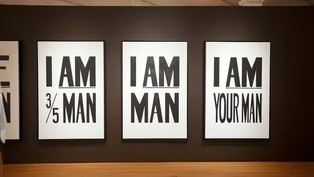
Clip: S45 Ep1 | 8m 54s | Hank Willis Thomas deconstructs advertising as a language at the Zimmerli Art Museum. (8m 54s)
 New
Music of the People: The New Jersey Folk Festival
Video has Closed Captions
Clip: S45 Ep1 | 9m 19s | The New Jersey Folk Festival celebrates traditional culture from diverse communities (9m 19s)
 New
Nyugen Smith: The Art of the Game
Video has Closed Captions
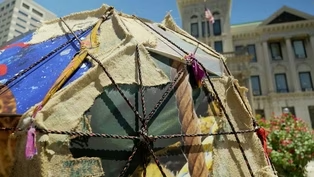
Clip: S45 Ep1 | 6m 46s | Nyugen Smith creates a soccer ball sculpture for the 2026 FIFA World Cup. (6m 46s)
Providing Support for PBS.org
Learn Moreabout PBS online sponsorship New Episode
 New Episode
- Arts and Music

Innovative musicians from every genre perform live in the longest-running music series.
 New Episode
 New Episode
 New Episode

Support for PBS provided by:
State of the Arts is a local public television program presented by NJ PBS